What they needed
- Energy optimisation from STEVFNs connected to interactive DPAC curves.
- Autarky and collaboration scenarios compared across countries.
- Governed access for researchers and policy teams.
- Dense data that stays easy to explore.
Glossary
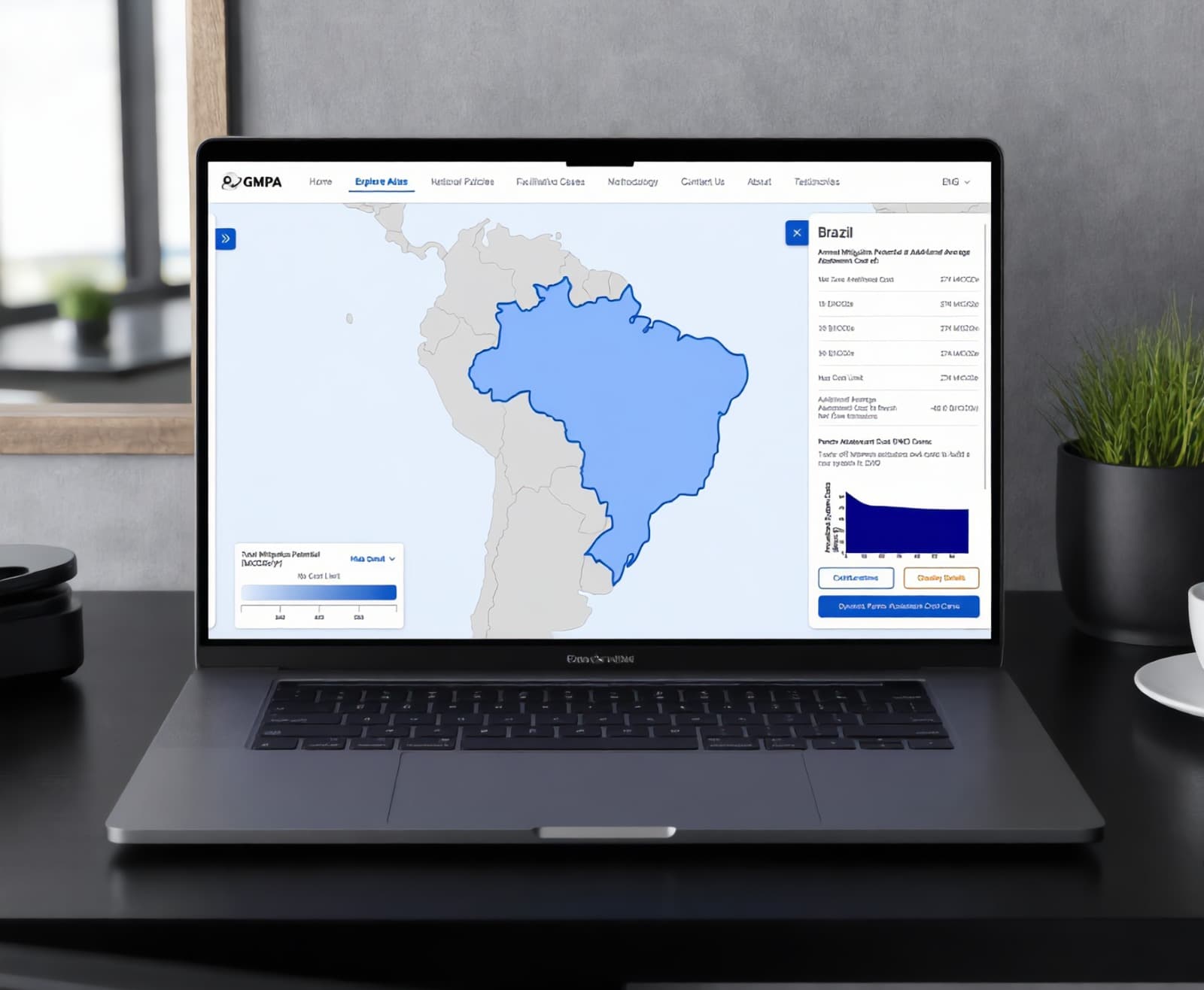
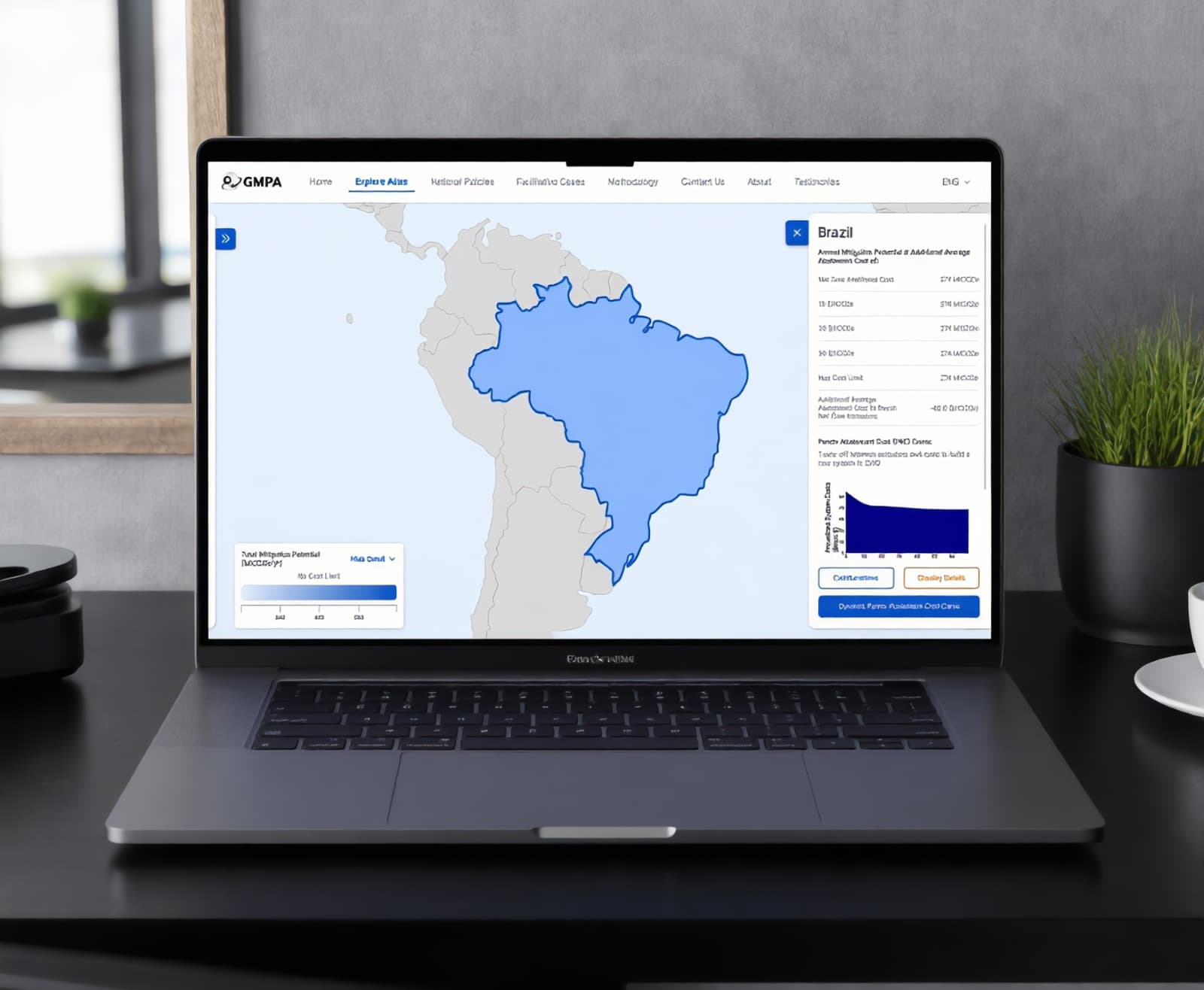
the Global Mitigation Potential Atlas, a decision-support platform developed by Moya Analytics.
Dynamic Pareto Abatement Cost, a curve that shows how the cost of cutting emissions changes as the target gets tighter.
each country meets its energy needs on its own.
countries cooperate across borders to meet their needs.
Core mission
"Unlock mitigation potential through collective action by demonstrating how international collaboration can reduce both costs and emissions while meeting energy needs."
30
countries
Mitigation potential mapped across 30 countries on the atlas
162
collaboration cases
Multi-country heatmap collaboration cases (live site rounds as 150+)
10
partners & funders
International partners and funders published on the live Impact section
2
scenario modes
Autarky and collaboration modes for comparing energy pathways
3
pathway scenarios
Temporal pathways at 1.5°C, 2°C, and 2.5°C
~4,100
data points
DPAC and mitigation collection points — not millions
Next.js (App Router), React, TypeScript, Tailwind CSS, Radix UI, D3, TopoJSON.
Strapi headless CMS, GraphQL and REST APIs, Supabase, PostgreSQL, JSON-backed atlas data layer.
AWS S3 with presigned uploads, SQS, DynamoDB, email through Resend.
NextAuth, Supabase SSR, JWT handling with jose, signup and approval workflows.
Python, STEVFNs, CVXPY, packaging via conda and/or uv, scenario automation.
Docker, PM2 deploy scripts.
GMPA is the Global Mitigation Potential Atlas, a decision-support platform from Moya Analytics. It shows how much emissions can be cut across countries and sectors, using STEVFNs energy-system models.
We built the web platform: interactive DPAC curves and heatmaps, researcher onboarding and verification, a Strapi content system, cloud integration, and a workflow for running modelling scenarios in parallel.
In an autarky scenario each country meets its energy needs alone. In a collaboration scenario countries work together. The atlas lets users compare the two, so they can see how cooperation changes both cost and emissions.
The frontend uses Next.js, React, TypeScript and D3. Data runs on Strapi, GraphQL and PostgreSQL, with AWS services for storage and queues. Modelling uses Python, STEVFNs and CVXPY.
Yes. If you have modelling pipelines, a policy or research audience, or data that needs governed access, we can map what it would take in a short call.